
Learn
The TAKE IT DOWN Act, Explained for Survivors
In Plain Language
What is the TAKE IT DOWN Act?
The TAKE IT DOWN Act is a federal law, signed on May 19, 2025. It is the first comprehensive federal law addressing image-based sexual abuse in all its forms, and it does two things for survivors.
It makes this abuse a federal crime. Knowingly publishing intimate images of someone without their consent is now a crime, whether the images are real or made with AI. So is threatening to publish them.
It makes platforms take images down. Websites and apps where people post content must remove those images within 48 hours of a valid request from the person in them. The Federal Trade Commission (FTC) holds platforms to that rule.
What It Covers
Who and what the law protects
The law is built around what was done to you, not how the image was made or how it got out.
Images shared without your consent
Real photos or videos of you that someone posted or sent around without your permission.AI-generated images and deepfakes
Fake intimate images made to look like you, which the law calls “digital forgeries.” They count, even though they aren’t real.Threats to share
Threatening to post your images to scare, control, or extort you is also a crime. This is often how sextortion works.Images you once shared privately
Agreeing to a photo, or sending it to one person, is not consent to have it published. The law says so directly.Survivors under 18
The law gives even stronger protection when the person in the image is a minor.
Getting Images Removed
How the 48-hour rule works
Since May 19, 2026, covered platforms (public websites and apps where users post content, such as social media) must give you a clear way to ask them to remove an intimate image of you. Here is what that looks like, step by step.
Save what you can first
Before anything comes down, keep a record: the web address (URL) of every post, screenshots, and the date you found it. This protects your options later, including a police report if you ever want one. We can do this with you.Find the platform’s removal request
Platforms must post a clear, easy-to-find notice explaining how to ask for an intimate image to be removed. Look in their help or safety pages, or ask us and we will find it for you.Send your request
A valid request is in writing and includes your signature (an electronic one is fine), enough information for the platform to find the image, a short statement that it was shared without your consent, and a way to contact you. Someone you authorize can send it for you.The 48-hour clock starts
Once the platform receives a valid request, it has 48 hours to remove the image. It must also make reasonable efforts to find and remove known identical copies on its service.If it stays up
A platform that ignores the rule can face action from the FTC. If a site misses the 48-hour window, we can report it to the FTC with you and keep pushing for removal.
Your choice
You don’t have to go to the police to use this
A removal request goes straight to the platform. Reporting a crime is a separate decision, and it is yours to make, whenever you are ready. Saving evidence now keeps that door open.
Honest Limits
What the law can’t do yet
We will always be honest with you about where the law stops. Knowing its limits helps you plan, and it is why our work doesn’t end at a single request.
It reaches platforms, not every corner of the internet
The 48-hour rule applies to sites and apps that host what users post. Images can also end up on sites built to spread abuse, or with companies the law doesn’t name. We work across those layers too. Why enforcement is hardIt doesn’t create a way to sue
The Take It Down Act doesn’t create a way to sue the person who did this for money. But if a real intimate image of you was shared without your consent, a federal law passed in 2022 already lets you sue. It was part of the Violence Against Women Act Reauthorization Act of 2022. If the image was made with AI (a “deepfake”), a separate bill, the DEFIANCE Act, would let you sue too. It has passed the Senate but not yet the House, so it is not law yet.Removal can take time
Even with the 48-hour rule, copies can resurface on other sites. It can take days or weeks, and ongoing monitoring helps catch new uploads.State laws vary
Many states have their own laws on top of this one, and they change often. We can help you understand what applies where you live.
Why DIF
We know this law from the inside
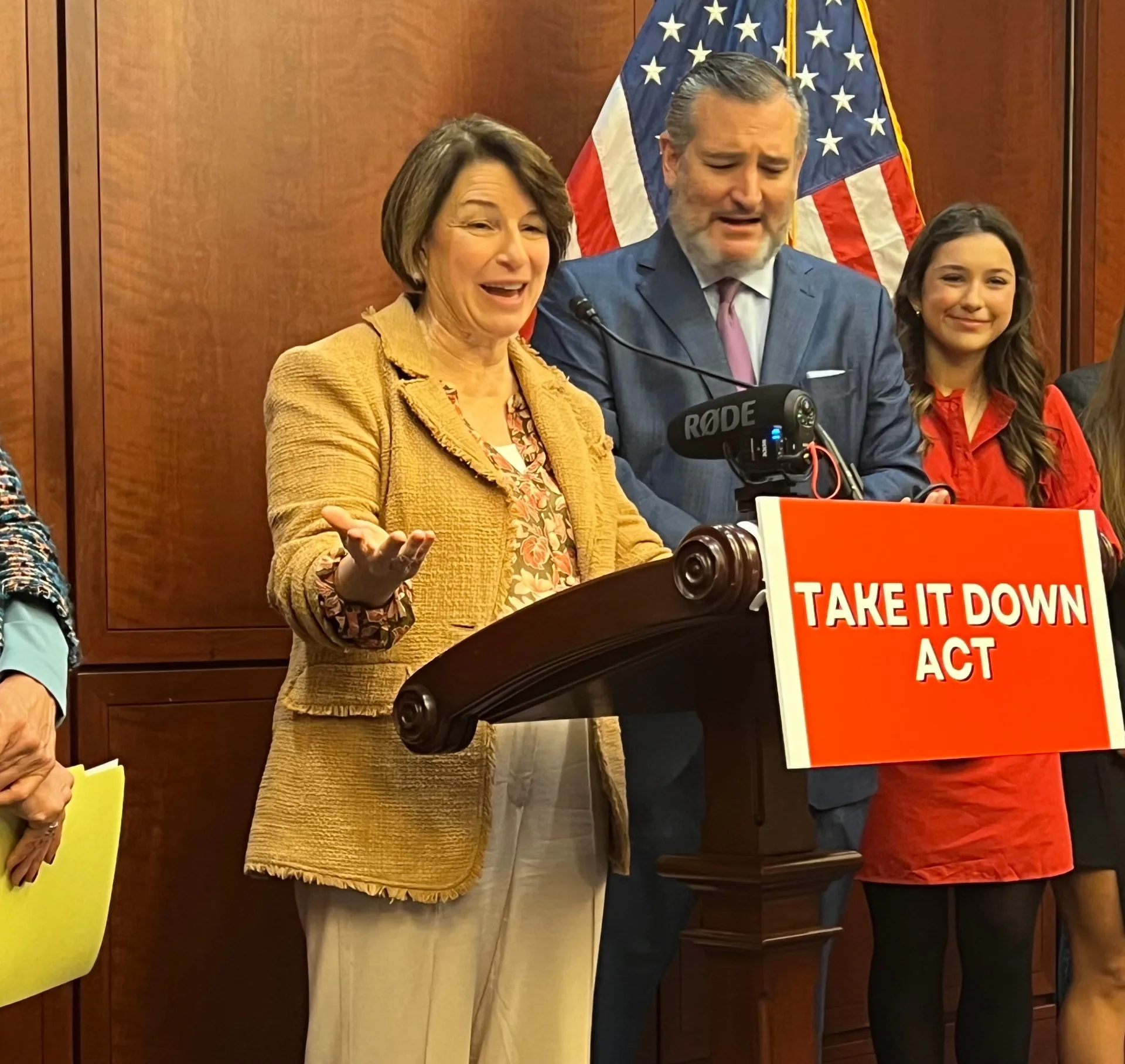
At 14, Elliston Berry’s courage and advocacy, alongside her mother, Anna McAdams, helped drive passage of the TAKE IT DOWN Act. Today Elliston is one of our Senior Advisors, Anna serves on our board, and our signature program, the Aster Ellis Fund, is named in Elliston’s honor.
Our Founder and Board President, Dawn Hawkins, was a central architect of the TAKE IT DOWN Act during her years leading the National Center on Sexual Exploitation. Our Executive Director, Andrea Powell, was a key advocate for the law’s passage, testifying alongside Elliston and many other survivor leaders across the country.
That is why we understand this law, and why we use it every day to help survivors get their images taken down.
How We Can Help
We Are Here to Help You Through This
Our support is free and confidential. When you reach out, an advocate can walk through every step with you.
Document the evidence safely
We help you gather every URL and screenshot, so you never have to sort through it alone.Submit removal requests with you
Together with a trusted technology partner that specializes in removing abuse content, we send the requests and track them.Follow up when platforms don’t act
If a site misses the 48-hour window, we report it to the FTC and keep pushing.Watch for new uploads
A free monitoring account lets us keep searching the web for new copies and get them removed.Preserve evidence for justice
Your evidence stays securely preserved after the images come down, so you can pursue justice when you are ready.Support beyond the takedown
Healing sessions and trusted resources, so you are supported as a whole person, not only as a case.
Your Questions
Frequently Asked Questions
What is the TAKE IT DOWN Act?
A federal law signed on May 19, 2025. It makes it a crime to knowingly publish intimate images of someone without their consent, including AI-generated deepfakes, and to threaten to. It also requires covered platforms to remove those images within 48 hours of a valid request from the person shown.
Does it cover deepfakes and AI-generated images?
Yes. The law covers what it calls “digital forgeries”: intimate images created or altered with AI or other technology so realistically that they look like genuine images of a real, identifiable person. A fake image of you counts, even though it isn’t real.
I shared the image with someone myself. Does the law still protect me?
Yes. The law says plainly that agreeing to an image being taken, or sharing it privately with one person, does not mean you agreed to it being published. You did nothing wrong.
Do I have to go to the police to get an image removed?
No. A removal request goes directly to the platform. Reporting the crime to law enforcement is a separate choice, and you can make it later. Saving evidence now keeps that option open.
How fast does a platform have to act?
Within 48 hours of receiving a valid request. It must also make reasonable efforts to find and remove known identical copies on its service. Platforms have had to follow this rule since May 19, 2026.
What if the platform doesn't remove it?
The Federal Trade Commission (FTC) enforces the 48-hour rule. If a platform misses the window, it can be reported to the FTC. We can help you do that, and we keep pushing for removal.
Is this the same as NCMEC's Take It Down tool?
No, although the names are similar. Take It Down is a free service from the National Center for Missing & Exploited Children that helps remove intimate images taken of someone before they turned 18. The TAKE IT DOWN Act is the federal law.
Can I sue the person who did this under this law?
The Take It Down Act doesn’t create a way to sue the person who did this for money. But if a real intimate image of you was shared without your consent, a federal law passed in 2022 already lets you sue. It was part of the Violence Against Women Act Reauthorization Act of 2022. If the image was made with AI (a “deepfake”), a separate bill, the DEFIANCE Act, would let you sue too. It has passed the Senate but not yet the House, so it is not law yet.
Does DIF charge for help using the law?
No. Our support for survivors is free and confidential.
Have a question that isn’t here? Reach out to us. No question is too small, and you don’t have to decide anything to ask it.
If you are under 18
There is help made for you
We are only able to serve individuals 18 and older. Take It Down from the National Center for Missing & Exploited Children is designed to help teens remove intimate images from the internet: visit takeitdown.ncmec.org (opens in a new tab) or call 1-800-843-5678. If you are in danger, call 911.
This page is for information and support, and it is not legal advice. It covers United States federal law only. Last reviewed: November 2026.
Keep Learning
More from the Learn Hub
Sextortion Help
Calm first steps, safer evidence collection, reporting options and support.
Read →Deepfake Abuse Help
First steps, takedown options and recent cases if someone made a fake sexual image of you.
Read →“Revenge Porn” Help
It's not revenge or porn. First steps, removal, your right to sue and support.
Read →Types & Terms
Every form this abuse takes, and the language to name it.
Read →Books & Reports
The researchers, journalists, and survivors whose work built this field, from the US, UK, and Canada.
Read →Case Studies
Five of the biggest recent cases, and what each one changed.
Read →Why Enforcement Is Hard
How the internet is actually built, and why a 48-hour takedown law only reaches one layer of it.
Read →For Students
Five fast, real reads about what's actually happening to people your age.
Read →Stay Connected
Stay Updated on Survivor Stories and Advocacy
Get notified when we publish new stories and share advocacy updates. A couple emails a month, easy to unsubscribe.
Emails come from the Digital Identity Foundation with a neutral subject line.